
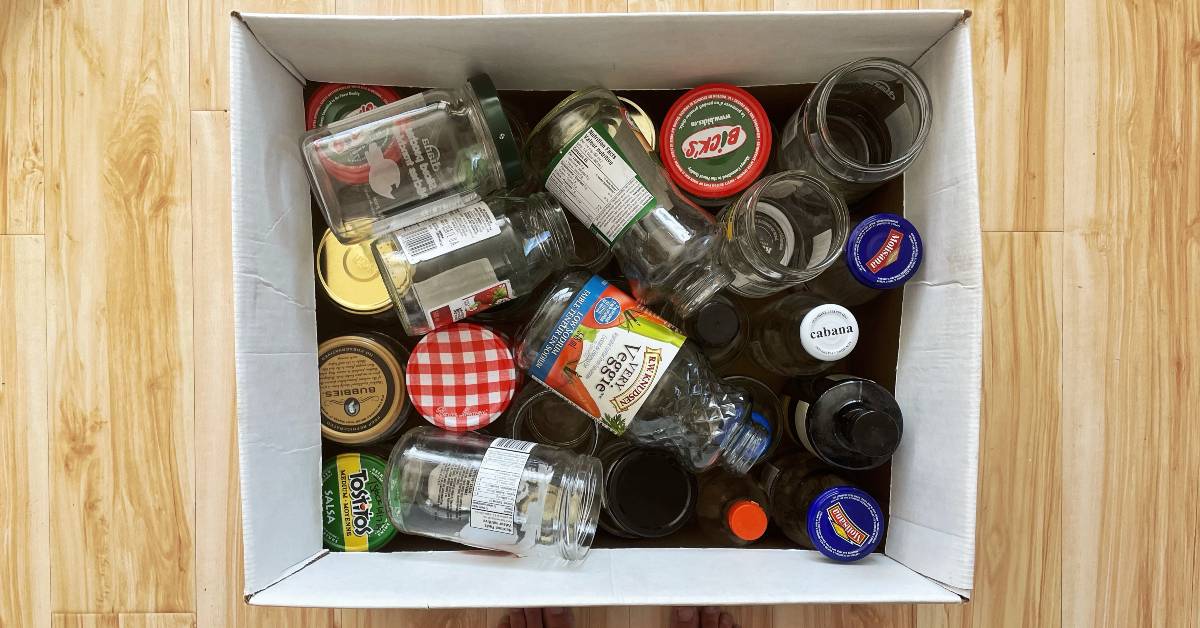
Why do we love glass jars? Four thoughts on refilling, reusing, and recycling.
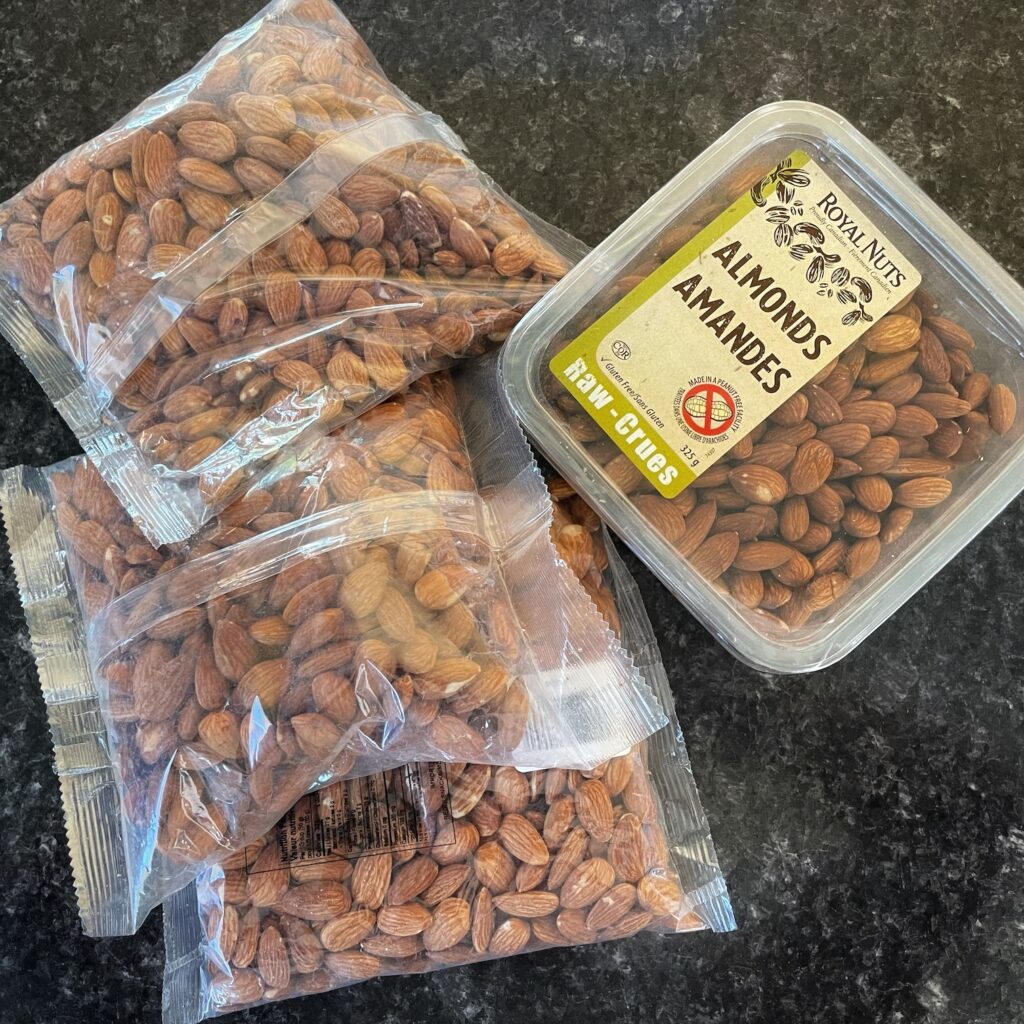
All I wanted to do was find a jar for a bunch of almonds. That’s it.
That’s all I wanted to do. It was a task that should have taken minutes.
But for some reason on this particular day, as I opened my pantry and stared at the wall of glass, I realized: that I have too many jars.
Jars love company
Now, I know I’m not the only one going through this experience. Entire memes have been created about jar hoarding and in the low-waste community, it’s practically a joke. We laugh but I think secretly, we’re all also breathing a sigh of relief as if someone else’s jar collection validates ours, or maybe it’s social acceptance. “Thank GOD I’m not the only one with a jar collection.”
But today, I decided: it’s time to purge. If it takes me five minutes to wedge out the jar I need (taking care to not topple over my carefully arranged piles of glass) then perhaps I have a bit of a problem.
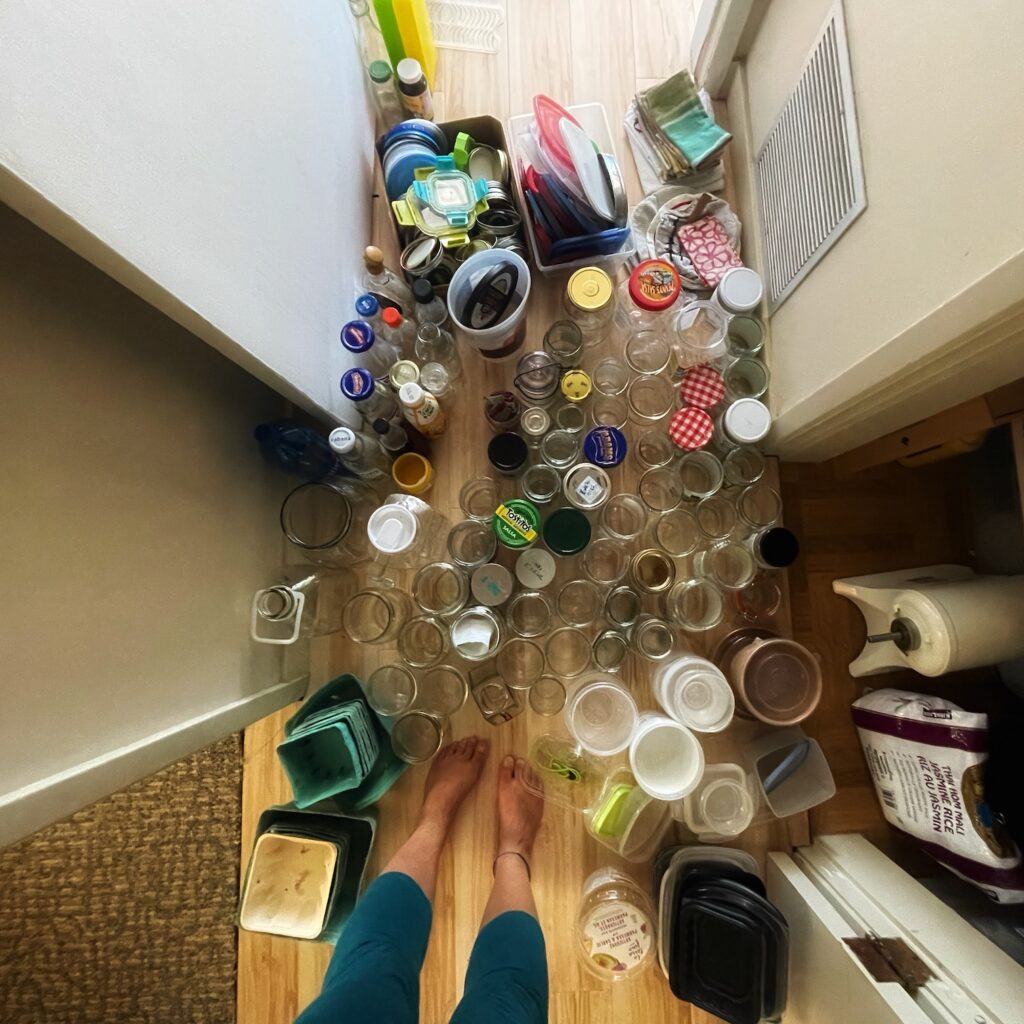
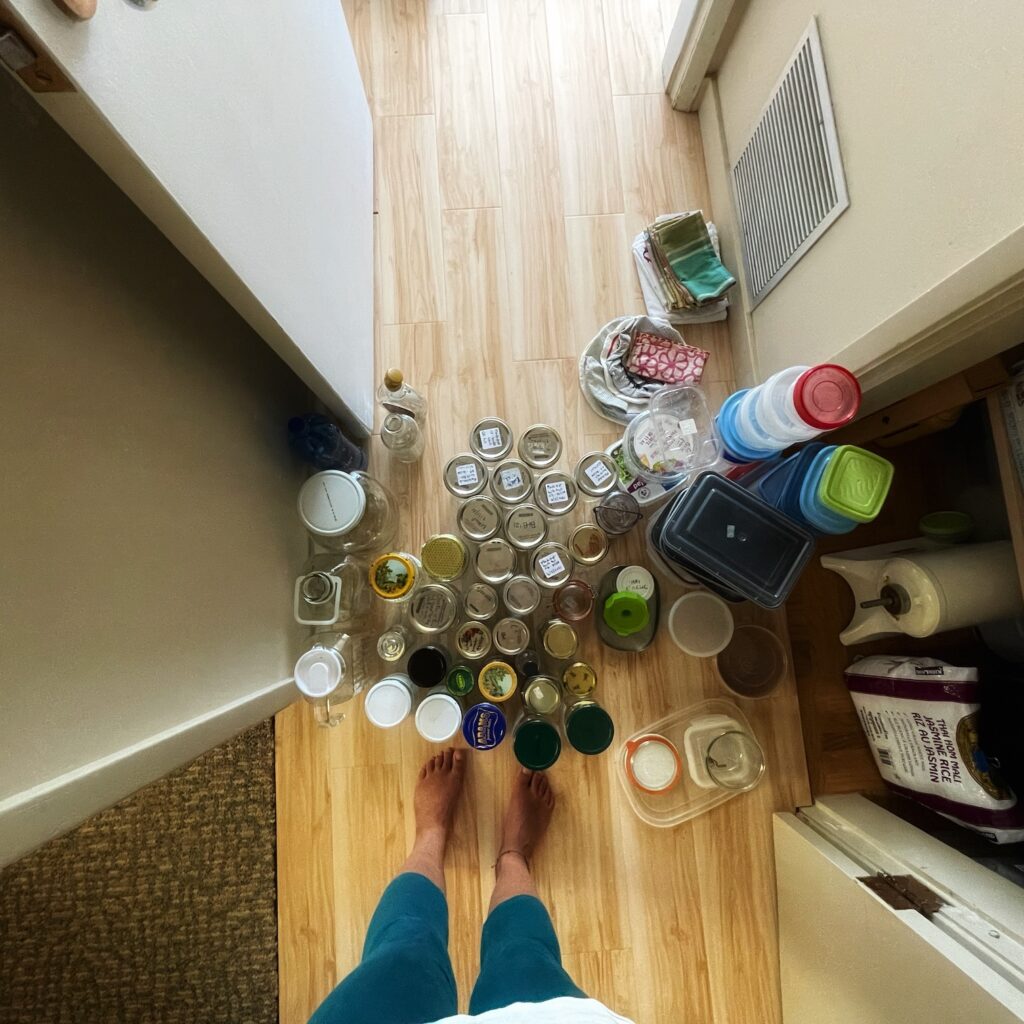
And so, I began by removing EVERYTHING from the jar shelf. No holds barred (or, jarred? 😆).
I even sent a photo of my unpacked shelf (now on the hallway floor) to my friend Casi (who made my awesome logo!) with the comment: “Hi, my name is Ryan and I’m a jar hoarder.” To which she responded, “Hahahaha the struggle is real. I do the same with jars and then I’m like wtf… How?!”
(So you see, we are never as alone as we think 🙂.)
You had one job…
What was supposed to be a simple task of finding a jar for my almonds ended up taking me half the day.
Why?
Well because once I started purging jars, everything else was up for debate. The dreaded Tupperware bottom + top matching? You can bet I made a pile of tops with no bottoms (random thought: isn’t it funny that humans can’t really function well without bottoms either? 🤣).
Endless saved plastic Ziplock bags? I recycled more than half and kept my favourites (yes. You can have a favourite ziplock bag when they are sparse around the house. Remember: we’re trying to live low-waste over here!) And all the random, sorta greasy aluminum foil half sheets I’d been saving and reusing (again and again), I finally balled up and put in the recycling bin.
Surprisingly, the jars were harder to part with. I had developed “feelings” for some of them. This is obviously ridiculous, or is it? I wondered about this as I sat, sweating in my hot hallway (it was 30 degrees Celsius in my house), shuffling them around like playing cards.
Why do we love collecting jars?
I have a few hypotheses. None of them are backed up by credible science, but surely some (or all) resonate with at least one of you.
- Jars are sturdy and reusable
- Jars are pretty
- Jars are safe
- Jars tug at the part of our brain that wants to stash things away for “a rainy day.” Is there a technical term for this? “The propensity to hoard?”
Let’s tackle each in turn.
Jars are sturdy and reusable
In the world of low-waste living, jars are Q-U-E-E-N! We love them! Jars make our pantries or closets feel tidy! And, they actually do help with organization. Plus, they keep our food fresher, and longer (if food is what you’re storing in them).
Jars are also infinitely reusable: buy a jar of pasta sauce once and use the jar to refill peanut butter until kingdom come (or until the jar breaks, whichever comes first 😂). Handy.
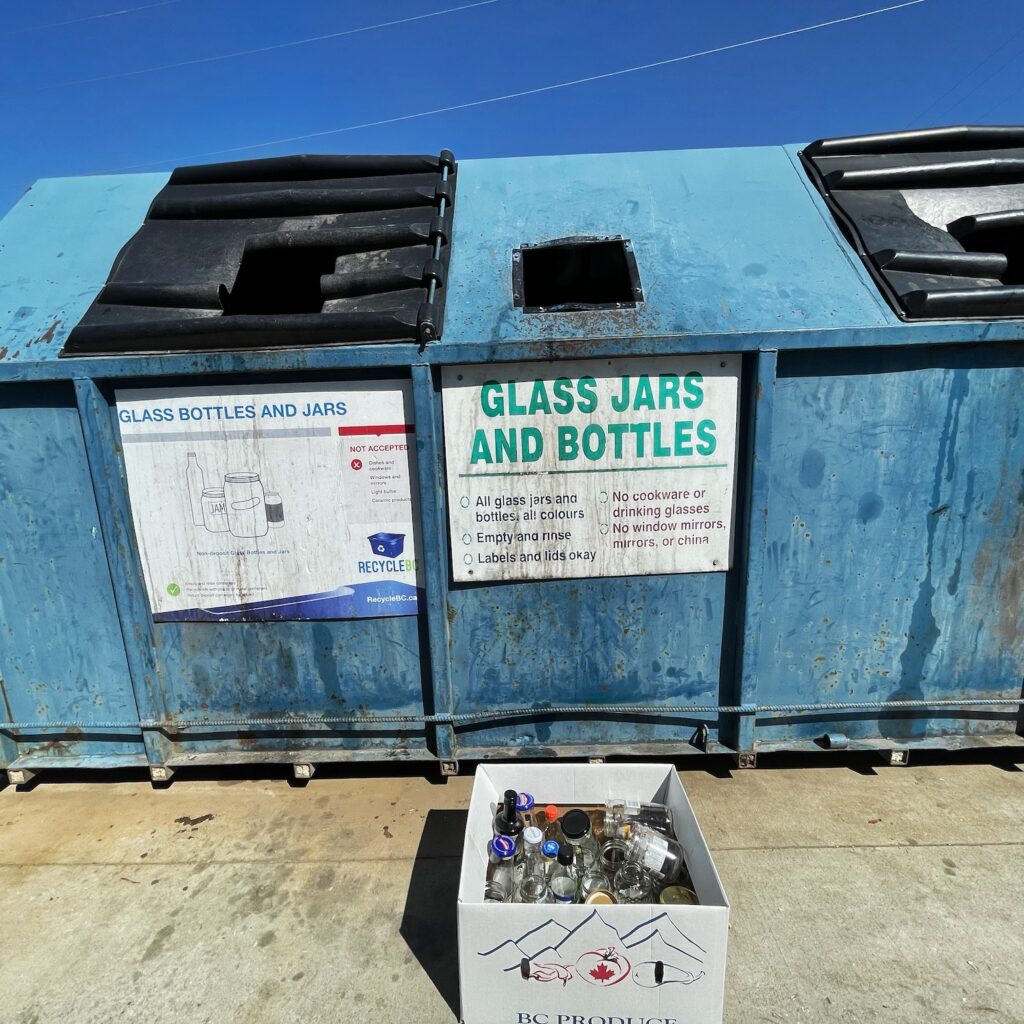
It’s worth mentioning that glass is endlessly recyclable meaning (theoretically) glass jars can be made into new glass jars. According to RecycleBC, the entity that manages recycling in BC, “Glass is shipped to Abbotsford to be processed into new bottles and to Quesnel to be made into sandblast materials.” (Abbotsford is near Vancouver; Quesnel is located in the Interior of BC.) I emailed them to clarify this: when I hear back, I’ll let you know!
Jars are pretty
I don’t think I need to convince you of this one. All you have to do is look at a jar, or wonder in amazement at how Mason jars are trendy now. Or, if you’re really feeling like falling down a rabbit hole, poke your head into Insta or Pinterest and type in #pantrygoals. You’ll see what I mean. Empty, they sparkle like jewels. Full, they are even more beautiful.
Jars are (mostly) safe
OK, here me out on this one: yes, glass can be pretty dangerous when broken. However, see #1 (Jars are sturdy). Most jars used for food have to withstand high-pressure canning, cooking or pasteurizing, plus all the bumpy transportation: they are durable! They’re also safer for holding food than plastic. Plastic is “sticky” and can absorb whatever its holding. It can also leach chemicals into food which is g-r-o-s-s. Meanwhile, glass is relatively inert, chemically simpler than plastic, and generally better for containing food. Not saying there is anything wrong with plastic (I have several freezer bags and Tupperware containers in my freezer) but relatively, jars are safe(r).
Jars tug at our brains
This is the one I can’t quite validate but hear me out. And, maybe this isn’t the case for everyone. But, it feels like for those of us who love jars, we covet them and we stash them for that “just in case” moment. We don’t seem to covet plastic containers in the same way. Although, I will admit to having accumulated my fair share of plastic take-out containers.
And certainly, for older generations that experienced life before plastic and after, there was a time when you saved everything, regardless of material. But what is it about glass? Is it a relic of a bygone era before plastic jars were the only real mechanism to preserve food for winter months? Are we all nostalgic for that time? Or are just yearning for things to be in glass because it feels better on our soul and conscience?
I have no answers to this, but something about glass pulls out our brains and heartstrings in a way that other materials don’t. I wrote about this a few years ago when I unearthed an old mason jar out of the forest: why was it that I felt so drawn to this jar, when, had it been a plastic container, I would have probably cringed and thrown it in the nearest dumpster? 🤔
Are we misusing glass?
As I was sorting through my pile of jars, I started feeling kinda bad*. All these jars I had at one point purchased, filled with something, and now I was debating whether or not to keep them, give them away, or recycle them. When I looked at the pile I was giving up, it felt like a waste.
*I will pause here to acknowledge that it’s amazing that I even have the time and space to mentally debate all of this, let alone multiple options for disposal. I’m speaking from a privileged position: not all people have the ability or space to save glass jars, let alone struggle over how to recycle them.
But, I did start to wonder: are we misusing glass? I’m still figuring this one out myself so bear with me. I started thinking that maybe we’re misusing glass a wee bit.
Here are some patterns I see regarding our glass jar habits (mostly based on my own experience). I’ll use pasta sauce in a jar as an example because it’s easily recognizable and we’ve all probably bought at least one jar of sauce in our lives. 😉
- We buy sauce once, recycle the jar, then buy another jar at some point in the future. We recycle that one, too.
- Or, we buy sauce, rinse and reuse the jar forever, but then we buy sauce again at some point in the future. Then, we have another jar and it seems like a good idea to keep that one too. Maybe we reuse it immediately or maybe we stash it for safekeeping.
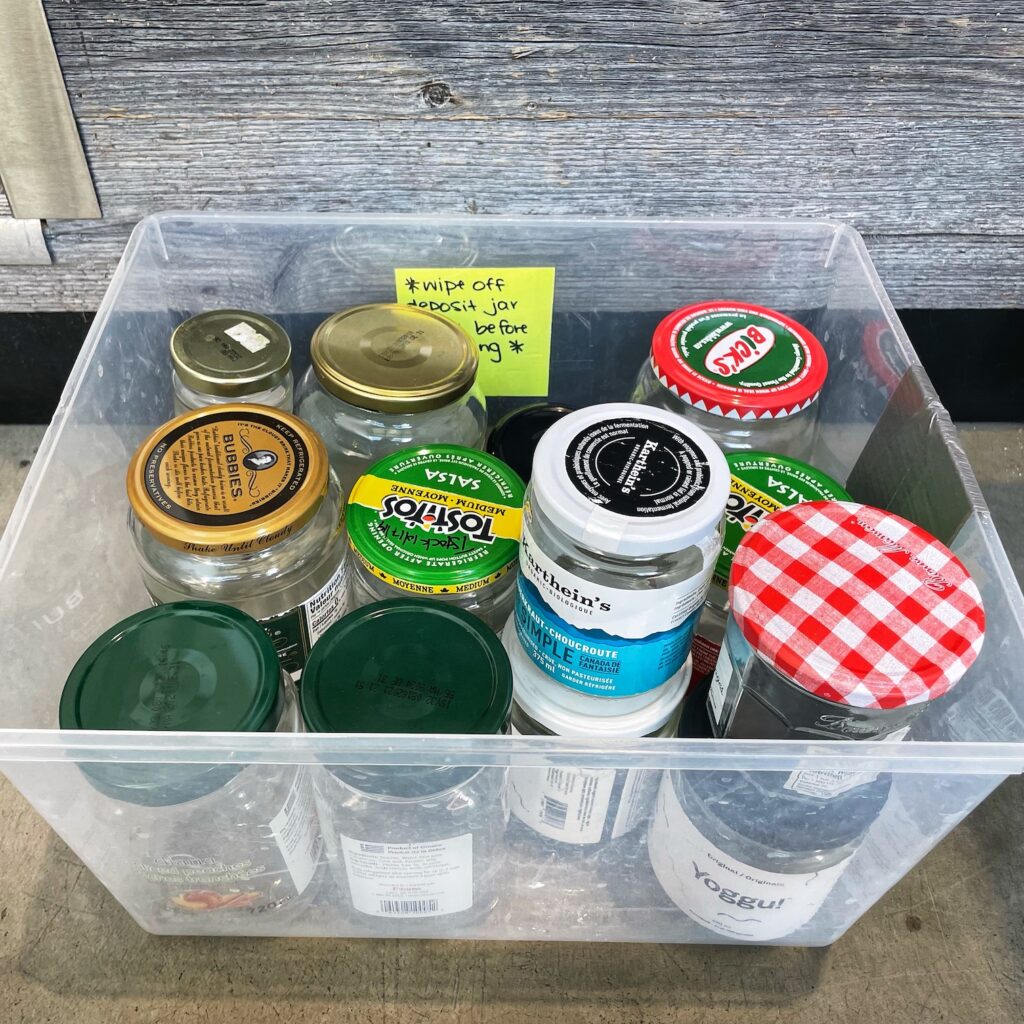
- Maybe we buy a jar of sauce, then decide we don’t need the jar, so we donate it to a refillery that has a community jar program.
- Worst case, we buy a jar of sauce and throw the jar in the garbage. (I have never done this, in case you were wondering,)
Too many jars, not enough value?
In many cases, we purposefully buy products in glass because it feels like the right thing to do. Glass > plastic.
But then we’re left with all these jars!! And that doesn’t quite seem sustainable to me, either, unless all recycled glass jars get melted down and turned back into new glass jars. If, however, we’re just crushing glass into pavement mix and then turning around to make new jars out of new glass, then are we really helping things or are we actually contributing to an extractive system?
The other problem is that a glut of jars makes them a commodity that is no longer special. Then, we start to value it less. We don’t hold onto jars (those of us that don’t have a problem with jar stashing) because we can just buy a new one the next time we buy sauce. Perhaps this is why classic Mason jars can fetch such a high price at second-hand stores and flea markets. They’re from an era when glass was still considered special. (And literally made from different glass, have you ever seen the old jars that were greenish??).
We all mean well and have good intentions. And, we need a different system to allow us to really exercise those qualities. Otherwise, we’re sort of just offloading our piles and not really getting ahead. We really need true refilling.
Again, I don’t have answers to these questions. This is what I was thinking about as I purged. What do you think?
What about community jars at refilleries?
Refilleries – and more specifically, community jar programs – seem like a great middle ground.
I love this idea. Instead of recycling, we can opt to share our jars for someone else to reuse. In this way, we’re actually addressing an equity issue and creating reciprocity, two key elements of a truly circular economy. If I don’t have space to store jars, but I really want to support the refill economy, a community jar program helps me do just that: I can go to a refillery, grab a jar from the community pile, and pay for the goods I need.
*Again, privilege: I’m fortunate to live in a place with enough of a market for not one, but two refill stores. It’s amazing and I truly hope that one day, all communities (regardless of size) will have a refill option.
What about refilling in general?
The idea of refilling is just so awesome to me. I really want it to be the way of the future. I feel like at some point in our past, this was just “the way.” Maybe I read too much Little House on the Prairie.
But the idea that you can buy a jar once and endlessly refill it, save money and jars. I do this with salad dressing and haven’t had to buy a new bottle in months.
Here’s the problem: our system isn’t set up to encourage refilling. Most grocery stores at this point have a bulk section for dry goods and candy which is a start. It’s also tricky to manage and keep safe, food-wise. And, as we saw with COVID, these systems can be taken away at a moment’s notice due to problems of health and safety. But, we eventually learned that COVID wasn’t transmitted on surfaces! But in the meantime, bulk stores shut down, and for most people, refilling became an impossibility.
What about the sauce?
And there’s still the question of refilling things like pasta sauce! Plus, all the other things we buy in glass: sauces, salsa, pickles, oil, vinegar, syrups, juice, soda, water, etc. It would be amazing to be able to go to the grocery store and fill up a jar of pasta sauce from some kind of clean and sanitary dispensary. But how would that look?
Clearly, I have tomatoes on the brain because I keep referencing pasta sauce. Part of the reason is that I had high hopes of growing enough tomatoes this year for my own salsa and sauce to see us through winter. Had that plan panned out, I wouldn’t have needed to buy jarred salsa or sauce. We eat a LOT of Pace salsa and the jars are awkward, so I never keep them. Then I feel guilty for throwing them in the recycling bin! Good grief.
Alas, my tomato crop did not pan out. Fortunately, I have access to some amazing farmers growing truly beautiful tomatoes, so I’ll probably buy a bunch from them to make sauce with.
But what about people who don’t have time or space (or care) to do this? Prepared sauce, locally made, can fetch a pretty penny. Most folks (myself i clouded) opt for a nice, mid-range jar of something that doesn’t have too much salt in it and is maybe organic.
So here we are; we’re consuming glass and sometimes reusing it but mostly recycling it and then consuming it again, and that doesn’t quite seem sustainable to me.
Is anyone addressing this?
Well, yes. See above, refilleries!
But also on a larger scale, big companies are trying to figure this out. Blueland is one, focused on household cleaning products. Loop is another, but it’s still only available in select stores (in select countries). For any Kroger fans, you might be able to partake in their offerings! And, there are more: the tide is turning! I’m sure there are many others (there certainly were a lot of hits for refillable beauty products when I hit the Google machine): let me know if you’ve heard of anything in your world.
Meanwhile, in Brazil and certain countries in Europe (like Germany), some bottles (PET and glass alike) are routinely collected, washed/sanitized, and reused! Customers pay a deposit at the point of sale, then receive that deposit back when they return their bottles. It’s not perfect (i.e. 100% of all bottles don’t end up being reused) but it’s something. Here in North America, we have similar systems in some places (but not everywhere). Unfortunately, our systems seem more linear: the deposit scheme is the same (I have thoughts about this…) but the bottle gets crushed and turned into something else (not a bottle).
A short note on Tupperware…
How many of you have felt the pain of trying (in vain) to organize the Tupperware drawer?
I don’t know how it happened (does anyone?!) but I ended up with all these lids and no bottoms. Unfortunately, my municipality doesn’t accept these in our recycling programs, although I will admit to having wishcycled them in the past. >.<
The thing about THIS is…I know where “away” is for these lids if I put them in the garbage. They will be dumped on top of a heap of other garbage, pushed with a bulldozer; crushed by a compactor; then topped with a layer of soil and wood chips.
I can’t do it. I just can’t throw them in the garbage. But I know if I bring them to a secondhand store, they’ll just be thrown away.
What do you do with Tupperware that is mismatched? 🤷🏼♀️
Back to the almonds
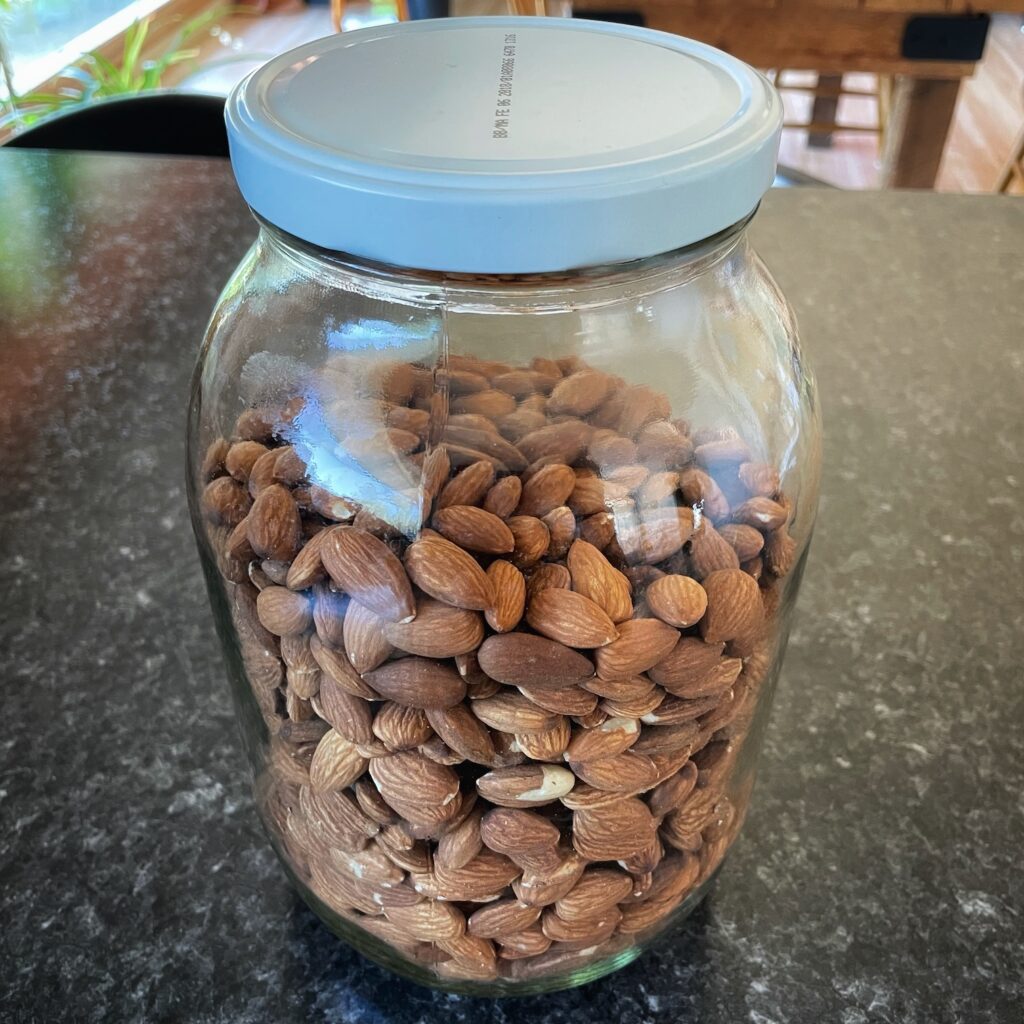
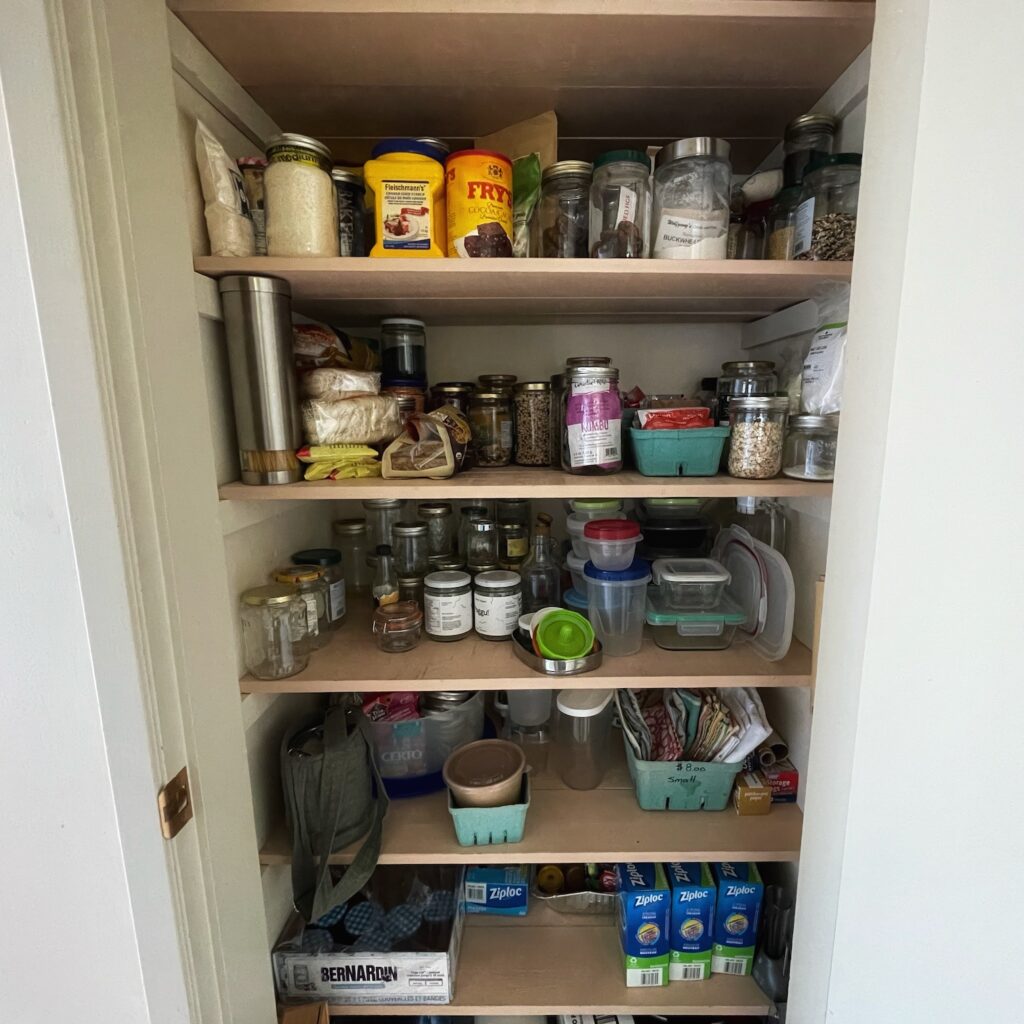
Once the jar shelf was organized, I could actually SEE what I had and it made the next, inevitable step, easier: tidying up the pantry and finally, finally finding a home for the almonds. Can you believe this jar was buried at the back of my closet?!
How to prevent future jar hoarding
It felt really great to purge my jars: I kept only the ones that “sparked joy,” then I donated a baker’s dozen to one of the refilleries, and recycled all the mismatched ones that didn’t have lids. I have empty spaces on my shelves and I’d like to keep it that way.
But, as you’ve now read, this activity really got my brain spinning on how we deal with jars and odd things like Tupperware lids with no bottoms. And honestly, it’s made me think twice over the last couple of days about what products I want to bring into my life. It’s also made me realize when in my life I’m walking through life on autopilot, not paying attention. Example: yesterday, in a fit of hangriness, I bought a pack of pre-made sushi in a plastic container! This, after I’ve been bemoaning all the containers that have accumulated in my life! >.<
Low-waste living ebbs and flows. At one point in my journey, I was fastidious with making my own sauces, dips, hummus, and salad dressing. I went a long while without ever touching store-bought hummus and I felt virtuous. Now, I don’t do that as much but this jar purge exercise reminded me of something: I’m responsible for dealing with the stuff I bring into my life. I have a choice when I buy something.
Slow down. Remember intention.
For me, what it comes down to is slowing down and bringing more intentionality into my life. Instead of rushing around, buying things kinda mindlessly, I can stop. I can choose to not buy a product based on its packaging. Or I can ask myself, “Am I prepared to deal with this packaging once the food is gone?” Because my worldview is shaped by not wanting to create waste, the answer is likely: “No.”
This is hard because everything is so convenient and we’re all busy people. What works for me won’t work for you and vice versa. Making time for making hummus or pasta sauce takes planning and preparation and honestly, sometimes it’s just easier to buy a jar or container. But, that’s also the way we’ve landed in this pickle.
I can’t really say how I’ll prevent future jar hoarding because it might change. But a start might be for me to slow down! Can I find some time to make up a batch of pasta sauce from scratch? Probably. Can I make my own hummus? Yes, it’s absurdly easy and tastes better than store-bought.
But also, I might pick up some glass and containers along the way and I’ll just have to be OK with recycling them.
Do you stash jars away for a rainy day? How do you deal with the containers that enter your lives? I would love to know, let’s get a conversation going in the comments!

I LOVE this!! And just FYI it didn’t take me all day to read after all 🙂 You have inspired me to start on my jar purge as well. It is time as much as I love these pretty objects! I totally get all your feelings about them! Useful, gorgeous, inspiring … and hey we should make some sauce together!
I would wash the jars, remove the labels and store with lids on. Then they don’t get dirty inside and can be used immediately. It’s unfortunate that every manufacturer has its own shape, and even the lid sizes deviate sometimes. Then the lid is printed with branding and expiry dates. The jar type is a factor when I select food products. The most common lids with TO-82 and TO-66 diameters can be easily replaced.
The stuff at refilleries costs more than already packaged and you get a container for free. Once you see one of these same jars for sale for a euro during the canning season, you realize its retail value.
My jar collecting habit is hereditary. I grew up helping canning all sorts of garden produce. I still put up a small amount of stuff and maintain a good collection of canning jats. Canning jars always find me, especially as elders I know clean out what they have. I’ve passed on many sets to people getting into canning, but there’s still extra that has had to go to rummage sales.
Then, there’s the commercial jars, which I can tell you I heard enough “You paid for the jar, too” over my life to know why some people would insist on not throwing them out (or recycling). Sunk costs don’t sit well with folks. I return (when from a small producer) or gift as vases or recycle these as I have decided to use my canning jars for everything since they have uniform lids.
I can *totally* relate to the sunk costs of commercial glass jars – it’s something I’ve had to overcome so I don’t end up with closets of jars. It’s great that you’ve moved towards canning jars for everything – the standardized lids really do help make things easier that way.